
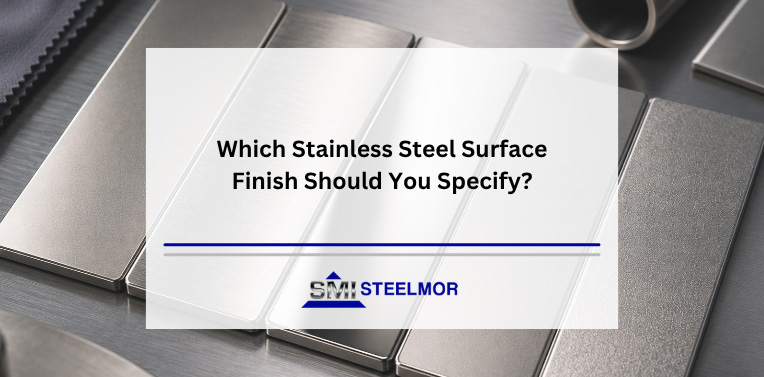
Choosing the right stainless steel grade is only part of the specification process. Surface finish plays an equally important role in corrosion resistance, cleanability, appearance and fabrication performance. Selecting the most suitable finish helps ensure the final product performs as expected while reducing unnecessary processing costs.
Whether you’re specifying stainless steel for food processing equipment, architectural features or industrial fabrication, understanding the purpose of each finish will help you make a more informed decision.
Key takeaways
- Surface finish influences appearance, cleanability and corrosion resistance.
- Different finishes suit different industries and applications.
- Choosing the correct finish can reduce fabrication and maintenance costs.
- Finish selection should be considered alongside stainless steel grade.
Quick Decision Guide
| If your priority is… | Consider… |
| General fabrication | 2B Finish |
| Decorative appearance | No. 4 Finish |
| Maximum reflectivity | Bright Annealed (BA) |
| Further processing or machining | Mill Finish |
| Hygienic food production | Smooth 2B or BA Finish |
Related Steelmor Services
This article complements the following Steelmor products and services:
- Fibre Laser Cutting Services
- Stainless Steel Services (Fabrication, Welding & Machining)
- All Stainless Steel Products & Services
Why does surface finish matter?
Surface finish affects far more than appearance.
The texture of the steel influences how easily contaminants can be removed, how resistant the material is to corrosion and how well it performs during fabrication. Rougher finishes can trap moisture and contaminants, while smoother finishes are generally easier to clean and maintain.
Selecting an appropriate finish begins with understanding the operating environment. Exposure to moisture, chemicals, coastal conditions and cleaning procedures all influence which finish will deliver the best long-term performance. Steelmor supplies stainless steel products in a range of finishes suitable for industrial, commercial and architectural applications.
According to World Stainless, appropriate surface selection contributes significantly to corrosion performance and lifecycle durability.
What is a 2B finish?
A 2B finish is one of the most commonly specified stainless steel finishes for industrial applications.
Produced through cold rolling followed by heat treatment and light rolling, it provides a smooth, matte appearance that balances corrosion resistance, cleanability, and affordability.
Typical applications include:
- Food processing equipment
- Chemical processing
- Pharmaceutical manufacturing
- Water treatment
- General fabrication
Because of its versatility, 2B is often the default choice when appearance is not the primary consideration.
When should you specify a No. 4 finish?
A No. 4 finish features a fine brushed appearance created through controlled abrasive polishing.
This finish is widely used where aesthetics are important while still requiring good corrosion resistance.
Common applications include:
- Commercial kitchens
- Lift interiors
- Handrails
- Architectural cladding
- Hospitality projects
The brushed texture helps disguise fingerprints and light scratches, making it a popular option for visible installations.
What is a Bright Annealed (BA) finish?
Bright Annealed (BA) stainless steel has a highly reflective, smooth surface produced in a controlled atmosphere during heat treatment.
Its appearance is brighter than 2B and can resemble a mirror finish without additional polishing.
BA finishes are commonly specified for:
- Decorative applications
- Food manufacturing equipment
- Medical equipment
- Cleanroom environments
- High-end architectural projects
Because the surface is exceptionally smooth, it is also easier to clean than many rougher finishes.
Guidance published by the British Stainless Steel Association (BSSA) notes that finish selection should always reflect both functional and aesthetic requirements rather than appearance alone.
When is mill finish appropriate?
Mill finish refers to stainless steel supplied in its as-manufactured condition with minimal additional surface treatment.
It is often selected where:
- Components will be machined.
- Surfaces will be painted or coated.
- Additional finishing will take place after fabrication.
- Appearance is not critical.
Although it may be the most economical option, mill finish is not always suitable for applications requiring high hygiene standards or decorative presentation.
How should you choose the right finish?
Rather than asking which finish is “best”, ask which finish best suits the application.
Consider:
- Operating environment
- Corrosion exposure
- Cleaning frequency
- Visual appearance
- Fabrication requirements
- Maintenance expectations
- Budget
Matching these requirements to the correct finish improves performance while avoiding unnecessary processing costs.
Before You Decide
✔ Have you selected the appropriate stainless steel grade?
✔ Will the product be exposed to chemicals or coastal conditions?
✔ Does the application require a decorative appearance?
✔ How frequently will the surface be cleaned?
✔ Will additional fabrication or polishing be required?
Frequently Asked Questions
Which stainless steel finish is most common?
The 2B finish is one of the most widely used finishes because it offers a practical balance of performance, corrosion resistance and cost.
Is a brushed finish the same as No. 4?
In most commercial applications, a brushed stainless steel finish refers to a No. 4 finish.
Which finish is easiest to clean?
Smooth finishes such as 2B and Bright Annealed are generally easier to clean than rougher textured surfaces.
Does surface finish affect corrosion resistance?
Yes. Smoother finishes are generally less likely to trap contaminants and moisture, helping maintain the stainless steel’s passive protective layer.
Can the finish be changed after fabrication?
Many finishes can be mechanically polished or modified after fabrication, although this increases processing time and cost.
Selecting the correct finish supports better long-term performance
Surface finish is an important part of stainless steel specification, influencing durability, hygiene, appearance and maintenance throughout the product’s lifecycle. Considering finish selection alongside material grade helps ensure components perform as intended in their operating environment.