
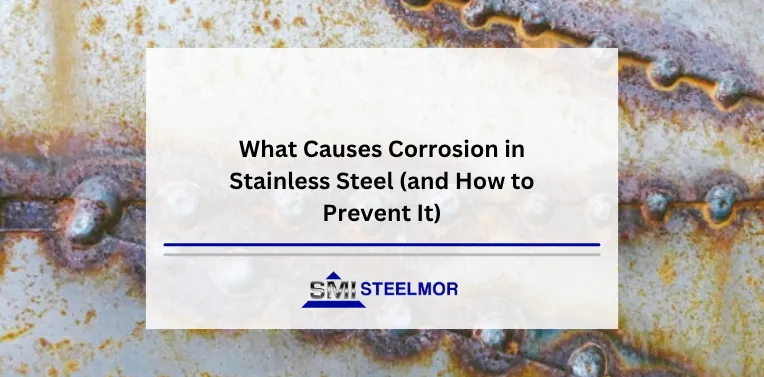
Stainless steel is selected specifically for its resistance to corrosion, yet surface degradation still occurs on structures and components that were poorly specified or inadequately maintained. Several failure modes can compromise the passive layer that protects stainless steel from rust and pitting. Identifying these causes early makes prevention straightforward.
Key takeaways:
- Stainless steel depends on a chromium oxide layer for corrosion protection
- Chlorides, iron contamination, and oxygen restriction each trigger different failure modes
- Grade selection, surface finish, and maintenance practice all affect long-term performance
- Most forms of stainless steel corrosion are preventable with the right specification
How does stainless steel resist corrosion?
Passive layer formation is the primary corrosion defence mechanism in stainless steel. When chromium content exceeds 10.5%, and the surface is exposed to oxygen, a thin chromium oxide film forms and acts as a barrier against moisture and chemical attack. The layer is self-repairing under normal conditions; when scratched, it regenerates on contact with oxygen.
That protective mechanism works reliably in most environments. The failure modes described below each interfere with the passive layer in a specific way, which is why prevention strategies differ depending on the cause.
What is pitting corrosion and why does it occur?
Pitting corrosion is localised attack that creates small holes or craters on the surface. Chloride ions, present in sea water, salt spray, and some cleaning products, break down the passive layer at weak points and allow corrosion to progress downward into the material. Pitting is insidious because surface damage is often invisible until the pit is advanced.
In South Africa, coastal environments from Durban to Cape Town present an ongoing pitting risk for lower-grade stainless steel. Specifying grade 316, which contains molybdenum, provides measurably better resistance because molybdenum slows chloride-induced layer breakdown.
What other corrosion types affect stainless steel?
Crevice corrosion occurs where oxygen is restricted, such as under washers, in tight joints, or behind overlapping surfaces. Without oxygen, the passive layer cannot maintain itself, and localised attack begins in the confined space. A joint design that minimises dead zones reduces this risk.
Galvanic corrosion develops when stainless steel is in contact with a dissimilar metal in the presence of moisture. The electrochemical reaction corrodes the less noble metal. Direct contact between stainless steel and carbon steel in wet conditions is a common source of galvanic damage in South African fabrication and construction.
Causes and prevention at a glance:
| Cause | Trigger | Prevention |
| Pitting | Chloride exposure | Use 316; rinse surfaces regularly |
| Crevice | Oxygen depletion in gaps | Improve joint design; seal gaps |
| Galvanic | Dissimilar metal contact | Insulating fasteners; single-grade design |
| Contamination | Embedded iron particles | Stainless-specific tooling and cleaning |
| Weld heat tint | Chromium depletion at weld | Passivation after welding |
How do you prevent stainless steel corrosion?
Prevention begins at the specification stage. Matching the alloy grade to the operating environment removes most corrosion risk before installation. Surface condition is equally important; iron contamination from carbon steel tools or abrasive materials introduces particles that corrode on the stainless surface and can seed pitting. Using dedicated stainless steel tooling and purpose-formulated cleaning products during fabrication and installation reduces this risk considerably.
FAQ
Q: Can stainless steel rust?
A: Yes, under specific conditions. Iron contamination, chloride attack, and oxygen restriction can each cause surface rust or pitting on stainless steel.
Q: Does surface finish affect corrosion resistance?
A: Yes. Smoother finishes provide fewer sites for contamination to accumulate and generally perform better in aggressive environments.
Q: What is passivation?
A: Passivation is a chemical treatment that removes free iron from the surface and restores the passive oxide layer, typically applied after welding or machining.
Q: How often should stainless steel be maintained in coastal areas?
A: Monthly inspection and rinse-down is a common baseline for coastal or industrial installations. Indoor applications generally require less frequent attention.
Keeping Corrosion in Check
Most stainless steel corrosion is preventable with the right grade, clean fabrication practices, and appropriate joint design. The failure modes described here each have a clear cause and a clear remedy. Stainless steel suppliers and fabricators in South Africa, including Steelmor, can advise on grade selection and surface treatment options suited to your specific application and environment.